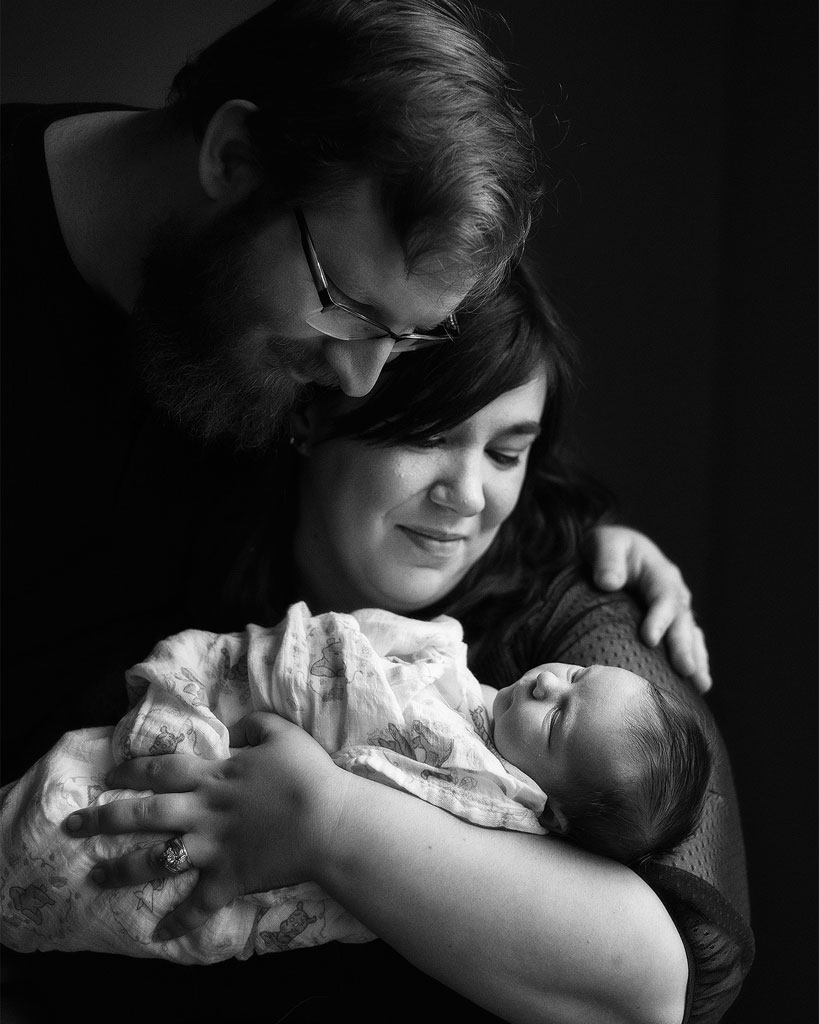
4 Ways in Which Photography Fosters a Sense of Belonging for Children
As a parent, you’ve done all the research on things that increase your family’s quality of life, especially when it comes to your children.
You’ve researched pediatricians (who fits your parenting style?), car seats (safety ratings!), preschools and school districts (the best education you can afford!), and nutrition (fewer processed foods = better health and behavior.) You’ve invested countless hours studying the ways to ensure your child’s physical health, safety, and developmental needs are met.
But you may not be aware of the subjective feelings your child experiences or ever think about their feelings of belonging to your family.
A question most parents never think to ask but may be obvious after contemplating for just a moment: “What impact do family photos have on my child’s emotional development?” You might be surprised that the answer is that in fact: OF COURSE displayed photography fosters a sense of belonging. The simple quick answer? It’s because of the visual impact of repeated daily exposure to this imagery. The more in depth answers follow.
A personal story:
I grew up as a first generation American. My parents emigrated to the United States in 1970. Turns out that my mamusia (mom) was newly pregnant with me. She found within a few weeks after their arrival to the U.S.. But when she left Poland she wasn’t aware that I was well on my way!
(“Made in Poland, born in the USA,” I always say.)
Like most immigrant families, the story of my family has ups and downs and is filled with coming-to-America drama. The gist of this is that two of my siblings were in the U.S. for seven years prior to my parents (and my eventual) arrival.
My parents (and two siblings that stayed back in Poland) coming to America journey is a story of reunion after a number of years apart. This is the 1970’s and the local media, back then, focused on positive human interest stories. My brother Adam (who was already here in America) contacted the local newspaper and a photojournalist met my parents (and my two other siblings) at O’Hare airport to greet them upon arrival. The photojournalist did an entire series of gorgeous black and white (FILM!) photos of their arrival – the visual story of reunion between my “American” brother and sister with the rest of my family.
These images later became an album of our families’ history, an heirloom with beautiful black and white photos of familial significance which is now in that same brother’s possession. I remember taking that album out with great reverence when I was a child…often wondering where I was but because it was an album it was sort of easy to explain it away. Here’s a grouping of some of my favorites from that album:
© Early in 1970 – photos by a talented (but nameless to me) photojournalist. I feel bad for not being able to credit their work. I hope they were aware of how much their work resonated with the people in these images and how it could leave a lasting impression. It very much did on Little Me, I would stare for hours in wonder at these black and white, contrasty images.
Sometime in the weeks after their arrival my mom and dad and four siblings were photographed, more formally, in front of some nameless, faceless brick building. This served as the centerpiece image for the newspaper article featuring this story of a grand family reunion and a story about immigration.
At some point my mom or one of my siblings, took the newspaper clipping of this more formal image of my family (sans me!) and placed it in a small gold frame. It was the only family photo on display with my four siblings in it and it lived on our living room television console for the entirety of my childhood.
I saw it everyday. Beautiful…right? I mean it is! It’s a beautiful story.
But to Little Me, the child: this is my family and I am not THERE! Sure, there was a larger family photo which did include me, my parents and my two brothers created for the parish directory…in which my sisters weren’t pictured, for good reason, they had their own homes with their husbands and the directory focused on individual residences. But I didn’t understand.
The lack of photos of my entire family including me made me feel – gosh, I’m writing this and I’m not even sure how to describe the feeling. Disconnected from my sisters…maybe just feeling the disconnection of my family in general as the “happy reunion” came with some new dynamics in a new country with new stressors.
So in a child’s logic: I WAS MISSING FROM THE ONLY FAMILY PHOTO WE HAD OF EVERYONE. The little black and white one on the tv!
As I write this I find myself tearing up, remembering the childhood me feeling the confusion, sadness, and exclusion that I had felt back when. And now, all these years later, I can still remember that feeling of not existing in that frame. I mean, I WAS THERE, within my mom, she was pregnant with me, but Little Me had no clue about all that – all the explanations in the world didn’t help me overcome those lack-of-inclusion feelings. Here I am, fully situated in my 50’s, having a moment about something that made me feel excluded during my formative years.
That’s my point. It affected me. It is human nature to want to be seen and be part of something. We are, after all, social creatures that have a strong need to connect to others within their “pack”.
I write this post remembering those feelings of not-being-part-of-something. I write this post to tell you why these words and photos including the Littles in your family matter. They matter when they are young. They’ll matter when they are in their 20’s trying to find their way in the world. And many many years later, they will still matter.
I think this is why I choose to become a professional photographer after having spent more than a decade in nursing…not only for the creative aspect and what I discuss in my bio but because I inherently understand how photography fosters a sense of belonging from personal, lived experience.
1) Your Family History Made Visible
Children build their identities through their connections to others in their families. They need to see themselves as part of something larger – a lineage, a story, an ongoing narrative that existed before them and will continue after them.
Visual narratives answer the questions every child (every human) asks, even if not out loud: “Where do I come from?”, “Where do I belong?”
Photographs on display, within their family home, create anchors – emotional and belonging – that reinforce themselves each time a child walks past a familiar face on the wall. Think about the number of times a person walks past a particular wall in your home and the number of impressions that space leaves on a person.
This isn’t just my lived experience as a first-generation American immigrant child. Research shows that displayed family photographs have measurable, positive impacts on children’s self-esteem and sense of security.
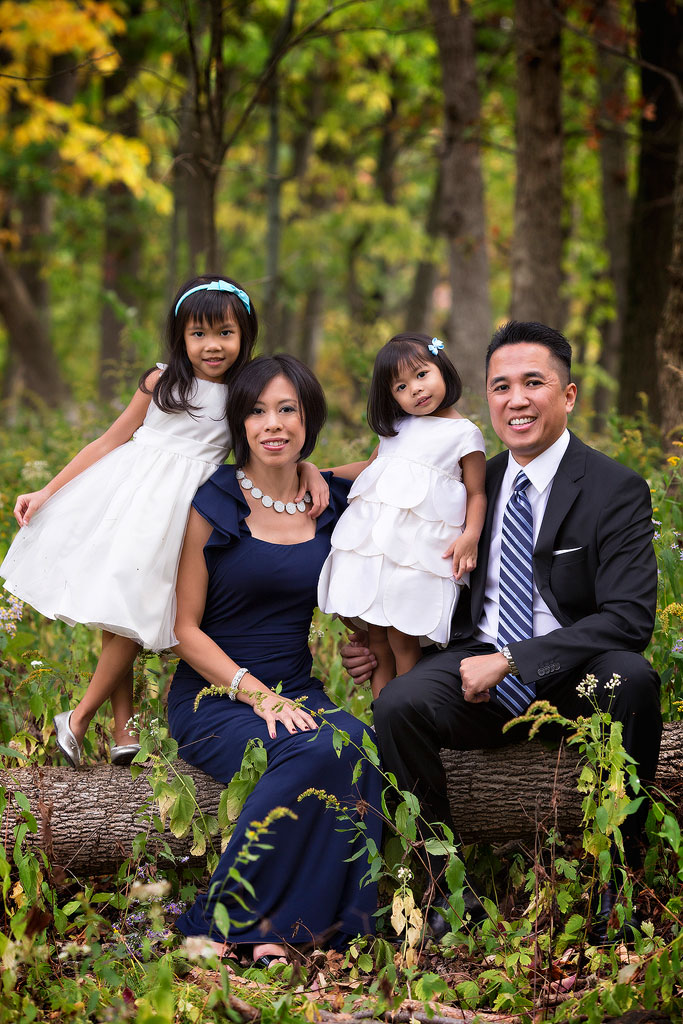
Multigenerational photos – grandparents with parents and children – allow children to visually place themselves within their family timeline. They see the resemblances, the connections, the continuity. “I have Grandma’s eyes. I have Dad’s smile. I belong to these people.” Visual reinforcement of anchors of connectiveness.
Photos of children at family events, parties, and celebrations reinforce: “THIS is who we are. These are my people. This is where I belong.”
When children see photos of themselves with their grandparents (if they’re lucky enough, great-grandparents), parents, siblings, and extended family throughout the years, they understand they’re part of an ongoing story – not isolated individuals, but connected members of something much larger than themselves. And that understanding? It impacts them positively for life.
So much so that the inverse is also true – and consequential.
The disconnection people sometimes feel, that profound lack of belonging that leads to isolation, depression, and (much) worse? Research increasingly points to a fundamental absence of connection and identity. When children don’t see themselves reflected in their family story, when they can’t answer “where do I come from?” with visual proof, that absence creates a void.
This isn’t abstract psychology. This is serious stuff with real-world impact.
Children who can articulate their family narrative – aided by photographs they’ve seen displayed throughout their lives – show greater resilience, better coping skills, and stronger sense of self. Research from Emory University psychologists Dr. Marshall Duke and Dr. Robyn Fivush bears this out: knowing your family story is one of the strongest predictors of emotional health in children.
2) Visual Emotional Anchors – The Power of Displayed Love
The idea that photos on display – as wall art or on tabletops – serve as constant reminders of belonging and being loved isn’t far-fetched when you think about how meaningful family imagery truly is.
Ask yourself: if your house was on fire and everyone was safely out, what would you grab?
For most of us, the answer is photos. Not your 86″ television (replaceable). Not your jewelry, even if it’s worth thousands. You’d grab your photographs!
If that’s your answer, you already understand the importance of family photos. You grasp their irreplaceable nature – you cannot get those moments back. Some of the people in those photos you’d save? They’re no longer here with us except in memory and in photographs.
The fact is most people already consider family photographs to be priceless and irreplaceable. The idea that displayed photos lending meaning to a young child isn’t a wild theory – it’s grounded in the reality that many of us already feel about displayed photos of our loved ones.
When a child sees themselves in an image combined with a sense of love and bonding, they have no question about belonging: “I matter enough to be here.” Family photos of the group reinforces: “I belong to these people.”
During middle school and the teen years, when fitting in feels paramount to a young developing human, this sense of having a place – this knowledge of interconnectedness with others – becomes vital. Especially when a child struggles to fit in with peers, which is so often the case during those formative years.
I remember a conversation with a friend whose son was having a difficult time at his new school in their new town. He felt out of place, unable to break into the “in crowd.” Despite joining band and other activities, he couldn’t seem to assimilate into this new setting with these new people.
One day, he asked his mom about a photo hanging on their living room wall – an image of his 2-year-old self, messy-faced after a cake smash at his birthday party. It was a photo I’d taken 12 years earlier, a somewhat casual snapshot that captured the moment beautifully.
“I looked so happy,” he told her. “I wish I could be that happy again, Mom.”
She reminded him of everyone who’d been at that party. How I’d captured who he was as a baby, and how that image reminded her of who he still is as a person. She told him he was happy in that photo because he was living in the moment, surrounded by family and love – and that he’s still surrounded by love, even when he’s feeling down.
Then she walked him around the room, discussing every framed photo on display. Each person who loved him. How much he meant to them. How his smile and laugh lit up everyone he encountered. What a joyful person he’d been and he would continue to be once he settled in and found his place amongst these new faces and personalities.
I’m not sure the photo alone served as the anchor – but it started the conversation. It gave this struggling 13-year-old a visual reminder that belonging isn’t just about fitting in at school. That there are always people who love him, who look forward to seeing him and his smile.
Weeks later, she told me he’d found a way to relax at school. He’d gotten to know other kids, made friendships that lasted through the rest of the year and beyond.
That photo on the wall? It helped him re-calibrate during a dark moment. That’s what displayed photographs do: they remind us that we have our place in the world. That we matter to people in our lives.
3) Photography As A Time Traveling Mirror: Seeing Oneself Clearly
There’s something that happens when a child is photographed consistently throughout their life. Something beyond the passage-of-time-documentation that is so common place today.
The child begins to see themselves.

But not in the way a mirror shows you – fleeting, forgotten the moment you turn away. Photographs show a child who they were, and in doing so, help them understand who they are (and are becoming). That two-year-old with the cake-smashed face? He could look at that image twelve years later and recognize something true about himself. The joy was real. It was documented. It existed.
The girly who is showcased in dress up clothes playing amongst her toys in her bedroom? She is caught up in a moment, the deep concentration visible in her fixed gaze on her task at hand. Play. Someday when she is in the midst of boyfriend drama maybe she’ll look upon that photo and see the peace that comes from within and just being and not worrying about pleasing another person.
For myself? During my 40’s I was inspired to do a selfie project – it was a method to improve my own view of my appearance. It wasn’t just random: “I look good today…” kind of work that would get posted on various social media sites. No it was meant to be a deep dive into my inner world via exploration of my outer world. I would take images of myself in various moments of time. Packing away my parents belongings during the height of familial turmoil as I attempted to grieve the loss of my parents in addition to just try to get through this THING that I never asked for nor wanted (the responsiblity of packing away 40+ years of American life for my parents). I may be smiling in some of these images while grappling with deep, dark grief and even the expression of smiling through pain has some value for me as a photographer and someone who studies faces for a living.
Imagery can be seen as an autobiography of sorts: be it selfies or formal portraits taken in a studio (or of a little girl playing with dolls in her bedroom while dressed up as Tinker Bell…).
When a child is photographed throughout their childhood culminating in their high school senior session – they have an accumulated record of their own becoming. They can see themselves change through the power of photographs, a sort of time travel right before their eyes! They can observe how they’ve grown and yet remain recognizably themselves through those stages of development.
That continuity is powerful. It says: Your story has chapters. You have a past. You will go somewhere.
For children who struggle with identity – and, let’s be honest, most do at some point – this visual record becomes an anchor. “I know who I am because I can see who I’ve been.”
As I re-created my branding several years ago I realized that THIS is the heart of what I call Photography For Life. It isn’t about photographing individual sessions. It’s about the ongoing, accumulating story of a family or child told in images over years and decades. It’s about documenting life in its various stages.
The families I’ve photographed since their children were wee babies now calling me to book their child’s senior portraits?! Those families understand this intuitively. The photos aren’t just decoration, despite being lovely enough to put on display and showcase. They’re chapters in a story their children will return to for the rest of their lives.
4) Printed and Displayed vs. the USB Stick in the Drawer
What would you say has a greater impact? A USB stick holding gigabytes of digital photos from many sessions sitting in a desk or junk drawer somewhere in your home? Or a large family portrait hung over the fireplace in a central location in the home where it is seen countless times throughout the day?
I don’t think we can even argue this because the answer is obvious.
The USB stick holding gigabytes of digital photos sitting in a desk drawer somewhere? It doesn’t have the same impact as a well crafted, professionally printed portrait. Not only could it get lost somewhere along the way…find its’ way beneath the junk drawer, get taken by someone to copy over with their 1000 word essay on World Peace due tomorrow or even just become unusable…it’s possible that before you transfer the data stored on this drive to another storage system the USB stick could become obsolete (it was not that long ago that as a professional photographer I was storing images for clients on CD and DVD-ROMs!)
The reality of photography is, in 2025: humanity took approximately 2.1 trillion photographs. Two point one trillion. 2,100,000,000,000. And yet research shows that fewer than 10% of those photos will ever be printed. I would argue that number to be far less.
A survey of everyday people found that nearly two-thirds seldom or never print their photos at all. The average person is walking around with roughly 2,000 images sitting on their smartphone – unseen, unencountered, quietly accumulating in a device that will eventually be upgraded, lost, or simply forgotten – likely never having had been backed up!
Two thousand photos. Most of which will never be on display somewhere for a child to look at daily, reinforcing his or her place in their family!
I want to be clear about why this matters – because it isn’t about the quality of the images. It isn’t even about whether they’re printed professionally or snapped on a phone. It’s about encounter – the repeated, passive, daily experience of seeing yourself and your family reflected back at you from the walls of your own home.
The psychology of belonging and of finding ones’ place in the world. Photos must be seen to do the work!
According to a survey conducted by the PPA (Professional Photographers of America) of over 1,500 consumers, “…more than 50% of people aren’t printing photographs or creating photo albums anymore, and 67% store their photos solely in digital form on a computer or phone.”
A deeper dive into the PPA survey: A PPA spokesperson said they believe “we have gambled away our family histories – trusting too much in our ability to protect our memories on our phones, tablets and other devices.”
THAT SURVEY WAS FROM 2015!! Eleven years ago (as of this article’s creation). Before cloud storage became the behemoth that exists today. In 2015 more than half of Americans had gone on record that they had stopped printing photographs.
Digital photos filed away in a desk drawer or a hard drive or on a phone (that is rarely backed up) are memories in storage.
Displayed photos are memories in circulation – actively participating in the life of your family, doing quiet daily work you may not even notice until the moment your struggling teenager stops in front of a birthday photo and says “I wish I could be that happy again, Mom.”
That moment doesn’t happen if the photo is on a hard drive. It only happens because someone made a decision – years earlier – that this image mattered enough to print, to frame, and to put on a wall where a child would walk past it ten thousand times before they ever needed it.
Photos must be see to do the work.
All this to say: the research, the stories, the psychology – all of it depends on one simple thing: the image has to be present in the child’s environment. Encountered in the morning before school. Glanced at during a difficult conversation. Noticed on the way to bed. That accumulation of small moments – that’s where the sense of belonging gets reinforced, time after time. Not because of one dramatic viewing – but in a thousand ordinary ones.
Digital photos filed away are memories in storage, locked away and maybe never to be seen again. Displayed photos are memories in circulation – actively participating in the life of the family, doing quiet daily work that you may not even notice until the moment your struggling teenager stops in front of a cake smash photo and says “I wish I could be that happy again, Mom.”
That moment won’t happen if the smiling toddler at their cake smash photo session is on a hard drive (that is destined for failure).
It happens because someone made a decision – maybe years earlier – that this image mattered enough to print, frame, and put on a wall where a child would walk past it ten thousand times before they needed it.
That’s the investment. That’s what professional portrait photography is actually for. A reminder to those in the photo, those in the family that: we were here, we belong to these people, we lived in this moment.
Now that you’ve read about the 4 ways in which photography fosters a sense of belonging for children and other family members and I’m sure you can think of a few ways in which photographs of yourself or your loved ones have transcended a moment and have provided remarkable value for you beyond money…think about how photography has enriched your life and take the words that I have written to heart.
My advice, after surviving mom-hood at the newborn > college aged level and as a photographer of 20+ years? Put images of your people on your walls, on top of tabletops and in albums which are easily accessible for viewing. You have absolutely no idea how much it will matter to them someday.